A HOMEOWNER’S GUIDE
How to Choose a Basement Waterproofing Company
10 questions to help you understand the recommendation, compare proposals and choose with confidence.
A basement waterproofing proposal should help you understand the water problem, the recommended work and the company standing behind it. You should be able to ask questions, review the details and decide without feeling rushed.
Use these 10 questions when speaking with any waterproofing contractor, including B-Dry. They will help you compare more than the price and understand what to expect before, during and after installation.
1. What is causing the water in my basement?
Start with the explanation behind the recommendation. Ask where the water appears to enter, what conditions bring it in and how the proposed work addresses that path. Water beneath the floor, wall seepage, surface runoff, plumbing leaks and condensation can call for different responses.
Describe what you have seen during rain, snowmelt or humid weather. Photos from a wet day can help when the basement is dry during the visit. If the source is uncertain, ask what the evaluator can establish and what needs further investigation.
B-Dry’s approach
B-Dry offers a free basement evaluation to inspect visible conditions, discuss your experience and explain the recommended next step.
2. Could a smaller repair or a different approach solve it?
Ask whether gutters, downspouts, grading or window-well drainage are contributing to the problem. Addressing exterior water management can sometimes solve or reduce water entry. Other homes also need a way to collect and remove groundwater beneath the floor.
Understand why the proposed amount of work is appropriate. A localized problem may suit a partial system. Humidity concerns, a plumbing leak or a suspected structural issue may require different equipment or another professional. The recommendation should explain both its purpose and its limits.
B-Dry’s approach
We often recommend properly working gutters and downspout extensions as a first line of defense against basement water. Directing roof runoff away from the foundation can make a significant difference and may solve the problem.
Sometimes groundwater still builds up beneath the basement even when gutters and downspouts are working properly. In those cases, an interior French drain may be needed. B-Dry installs both partial and full-perimeter systems, depending on where water enters and how much of the basement needs protection.
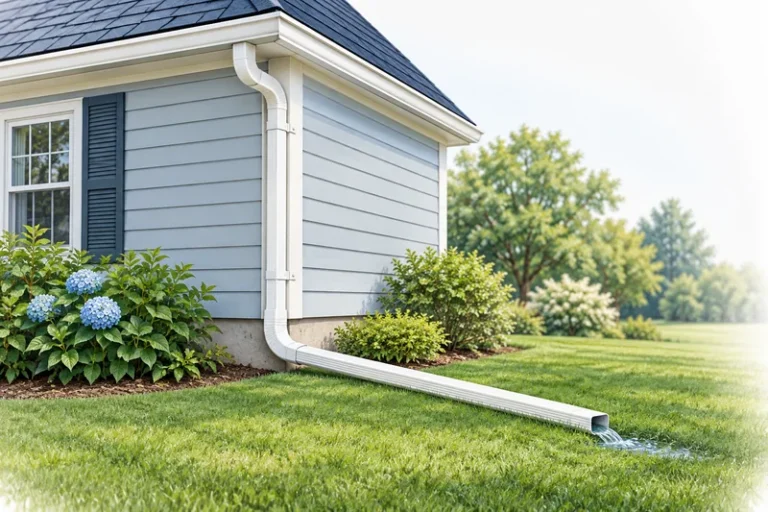
Gutters and downspout extensions help move roof runoff away from your foundation.
3. What exactly is included in the proposal?
Ask the contractor to show the planned drainage route, included areas, sump location, pump equipment and exterior discharge. Understand how the design handles wall seepage and water beneath the floor, and which water-entry locations fall outside the proposed work.
For an interior system, ask where the drain sits relative to the slab and footing, how sediment is managed and how the footing and supporting soil will be protected. These details should be explained for your basement. Also confirm access requirements, concrete replacement and any separate electrical or plumbing work.
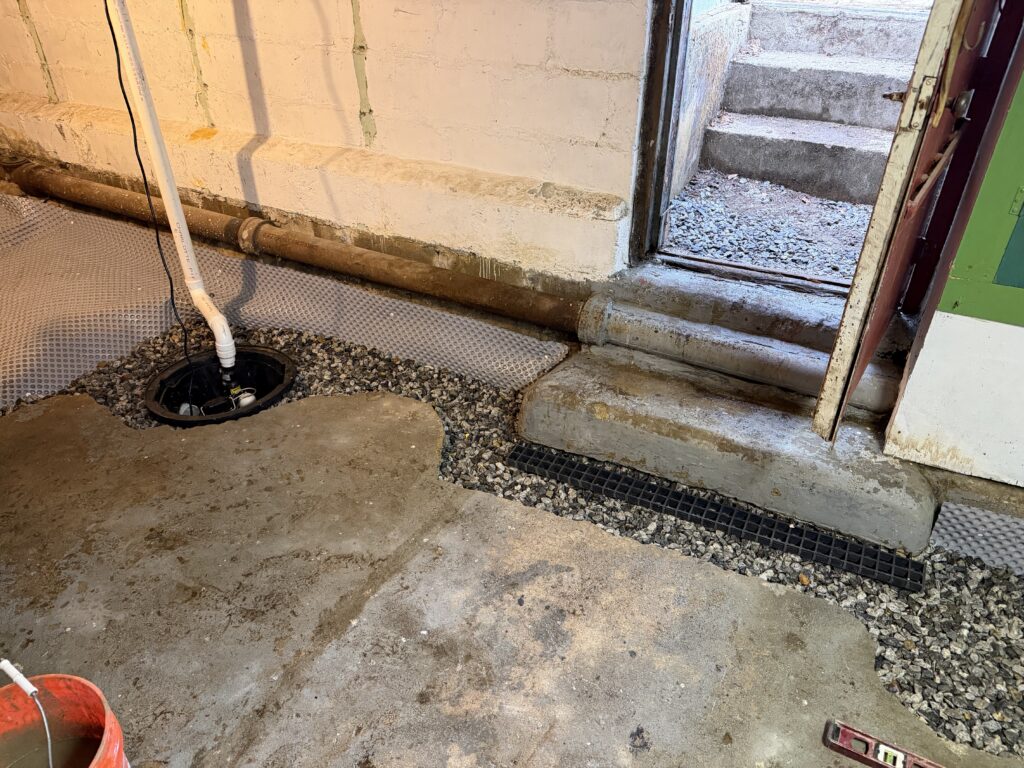
Actual B-Dry installation before concrete replacement.
B-Dry’s approach
The B-Dry system, based on our original patented design, places perforated PVC pipe in clean stone beside the foundation footing, near its bottom. This creates a lower collection point for groundwater beneath the basement floor. A wall membrane directs wall seepage into the system, and the collected water flows to a sump basin.
Some other systems place a drainage channel or pipe on top of the footing, which leaves the collection point higher. Ask each contractor to show you where the drain will sit and explain how that placement will handle water beneath your floor.
4. Who is the company I am actually hiring?
Check the exact business name and location on the proposal. Match those details to the reviews and business records you research, especially when companies have similar names. Ask who will supervise the installation and who will answer questions afterward.
Verify the registration or licensing applicable to the work, and ask for proof of liability and workers’ compensation insurance as applicable. In Massachusetts, homeowners can check HIC registration status and history through the state’s contractor resources.
B-Dry’s approach
B-Dry System of New England is independently owned and operated from Billerica, Massachusetts. Our Massachusetts HIC registration number is #216224.
5. How will my home be protected, and what cleanup is included?
Opening a concrete floor creates construction noise, dust and debris. Ask what protection will be used, which belongings you should move and how the crew will access the work area. Discuss finished walls, stored items and equipment that could affect the installation.
Confirm who removes installation debris, what cleaning is included and what the repaired floor will look like. Ask about concrete curing and when the area can be used again. Clear expectations before installation make it easier to prepare your home and evaluate the completed work.
B-Dry’s approach
After we receive your deposit, we send you a preparation sheet explaining how to get your basement ready for our crew.
The most important step is to move all movable belongings at least 4 feet away from the walls where we will be working. Fixed equipment such as HVAC systems, water heaters and oil tanks do not need to be moved. Our crew works around them.
We cover your belongings with plastic to help contain dust, but concrete work cannot be 100% dust-free. We remove installation debris and clean the work area as thoroughly as we can. Some fine dust may remain after the work is completed.
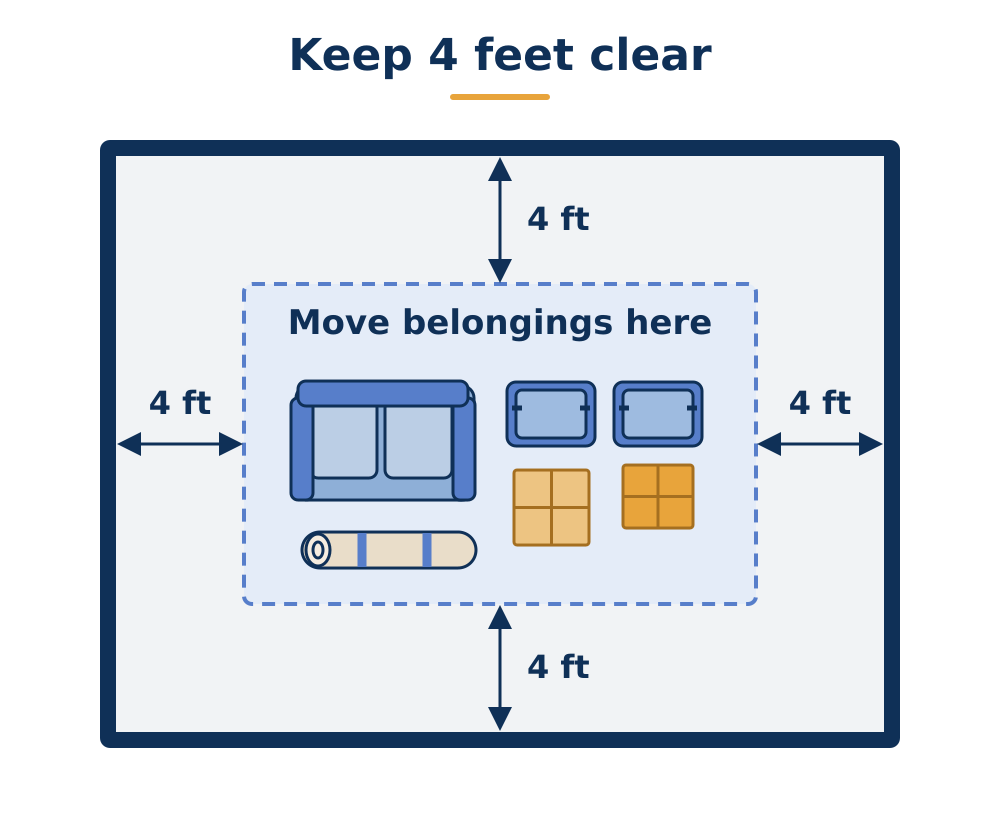
Move belongings toward the center, leaving at least 4 feet clear along the walls where we will work.
6. What does the warranty cover, and what has separate coverage?
Read the written warranty before deciding. Identify the company responsible, the work covered, exclusions, transfer steps and any required fees or maintenance. Ask how a claim is handled. A partial installation’s coverage should clearly identify the installed portion.
B-Dry’s approach
Once the project is completed and paid in full, the installed B-Dry French drain portion is covered for the life of the structure by a transferable warranty, including partial systems. No annual maintenance plan is required for that warranty. Pumps, batteries, inverters, dehumidifiers and discharge equipment have separate terms. The written warranty provides the complete details.
7. What happens if the power fails?
If the system uses an electric sump pump, ask what happens when utility power is unavailable. Find out whether backup equipment is included or optional, which pump it powers and what determines its runtime. Also ask how the setup addresses a pump failure.
Battery capacity and condition, pump power requirements and incoming water all affect how long backup power lasts. A single promise of a fixed number of hours or days needs context.
B-Dry’s approach
B-Dry typically uses two regular sump pumps in the well. With our optional inverter and battery setup, one of those pumps receives battery power automatically during an outage. The battery recharges when power returns. Runtime depends largely on how much water enters the well and how often the connected pump needs to run during an outage.
As a general guide, a fully charged battery may provide about 6–8 hours of backup coverage when water is coming in heavily and the pump runs frequently, or 2–3 days when water entry is light and the pump runs only occasionally. Battery condition and the installed equipment also affect these estimates.
8. What is the total price and payment schedule?
Compare written proposals for the same scope (an apples-to-apples comparison). Check the included drainage, equipment, discharge work and concrete repair, along with optional items and homeowner responsibilities. Ask how unexpected conditions or additional work will be priced and approved before that work proceeds.
Get the deposit and payment stages in writing. Review and sign the agreement before work begins, and keep a signed copy.
B-Dry’s approach
B-Dry typically requires a deposit one month before your scheduled project start date. A start check is due on day 1, and the remaining balance is due upon project completion.
9. Can I take time to review the recommendation?
You should understand the recommendation and written terms before making a decision. Ask questions about anything unclear. If you compare proposals, look at the diagnosis, included work, equipment and warranty as well as the total price.
Ask for a clear explanation of any claimed urgency. A useful consultation gives you information you can review and a way to ask follow-up questions. An advertised discount should not replace an explanation of why the work is appropriate.
B-Dry’s approach
B-Dry provides a written quote for you to review in your own time. You should never feel pressured to sign simply because a salesperson is sitting in your home. We do not ask you to sign during the estimate.
We would love to earn your business and will take the time to answer your questions so you feel comfortable before proceeding. When you are ready, call our office to discuss the next step.
10. What happens at completion, and if I need help later?
Before work begins, ask what checks and walkthrough will take place at completion. Request an explanation of the installed pumps, discharge route and any backup equipment or alarms. Understand what was tested and what routine attention the equipment needs.
The final check shows that the pumps and other equipment are working at that time. It cannot simulate every future storm. Keep the proposal, equipment information and written warranty together. Make sure you know whom to contact for service and how to report a concern.
B-Dry’s approach
B-Dry reviews the completed system with you. Our Billerica office is your contact for questions about installation, service availability and warranty coverage.
Independent homeowner resources
For more detail on moisture diagnosis, contractor verification and Massachusetts contract requirements, consult these resources.
Get clear answers for your basement
You do not need to arrive with a technical diagnosis. Tell us what you have noticed, bring your questions and ask us to explain the recommendation. A free B-Dry basement evaluation is a practical place to start.