Vertical crack
A crack running up and down the wall. We look at its width, movement and signs of water.

Vertical cracks, horizontal cracks and bowing walls call for more than a cosmetic patch. B‑Dry evaluates the wall and its moisture and movement conditions, then recommends a repair suited to the home.
These simple illustrations show common patterns. We evaluate the wall, movement and water before recommending a repair.
A crack running up and down the wall. We look at its width, movement and signs of water.
A crack running across the wall can point to pressure or movement that needs closer evaluation.
A wall that curves inward. Vertical carbon-fiber straps can reinforce it without a bulky beam.
Not sure what kind of wall you have? These examples can help you recognize it. We assess the condition of each wall before recommending a repair.
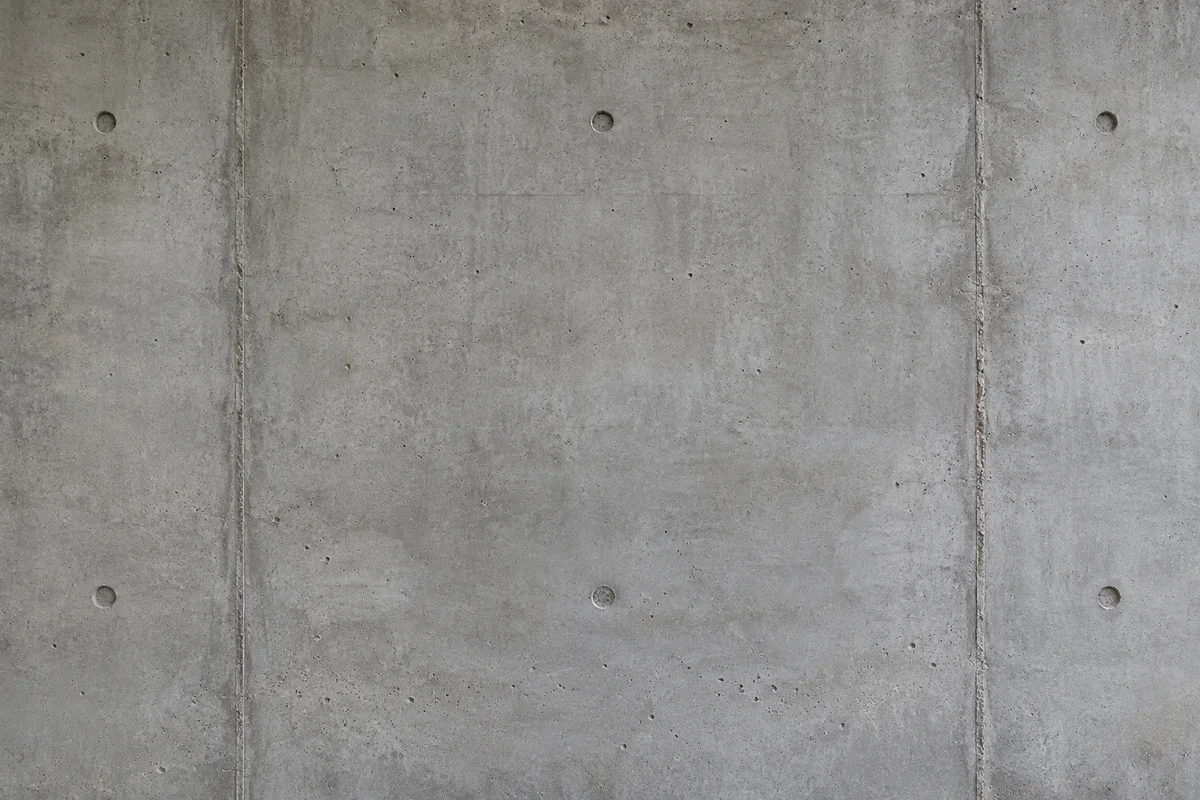
A mostly smooth, continuous concrete wall, often with vertical form lines and small circular tie marks.
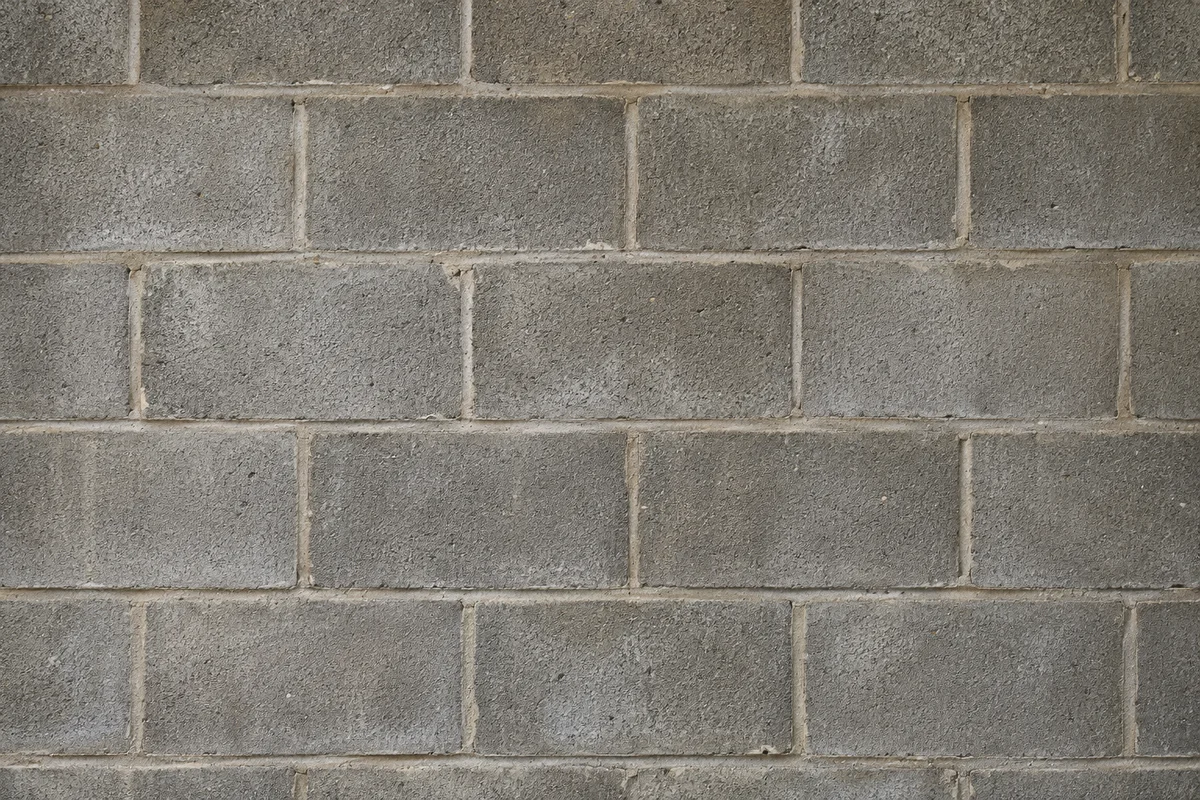
Rows of rectangular blocks with visible mortar joints, usually staggered like bricks.
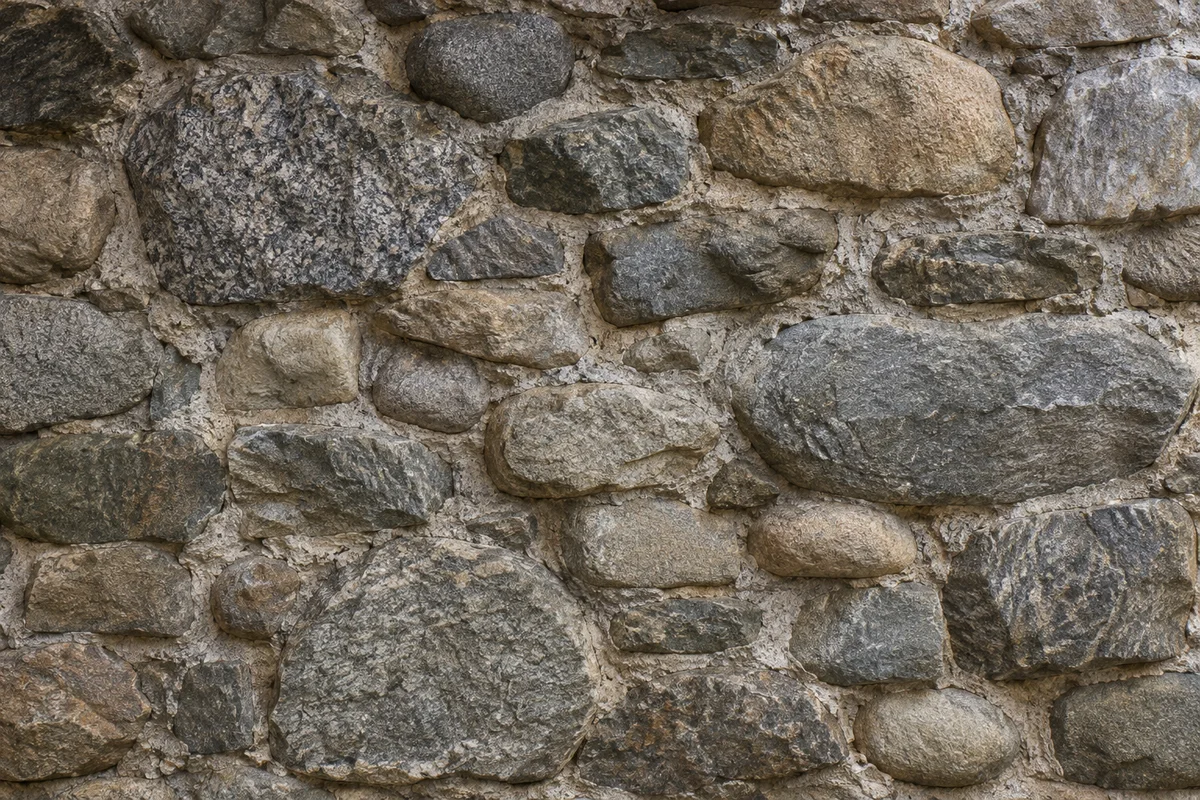
Irregular natural stones set together with mortar; age and surface condition vary widely.
Six stages from a recent repair. The exact materials and reinforcement layout are chosen for each wall.
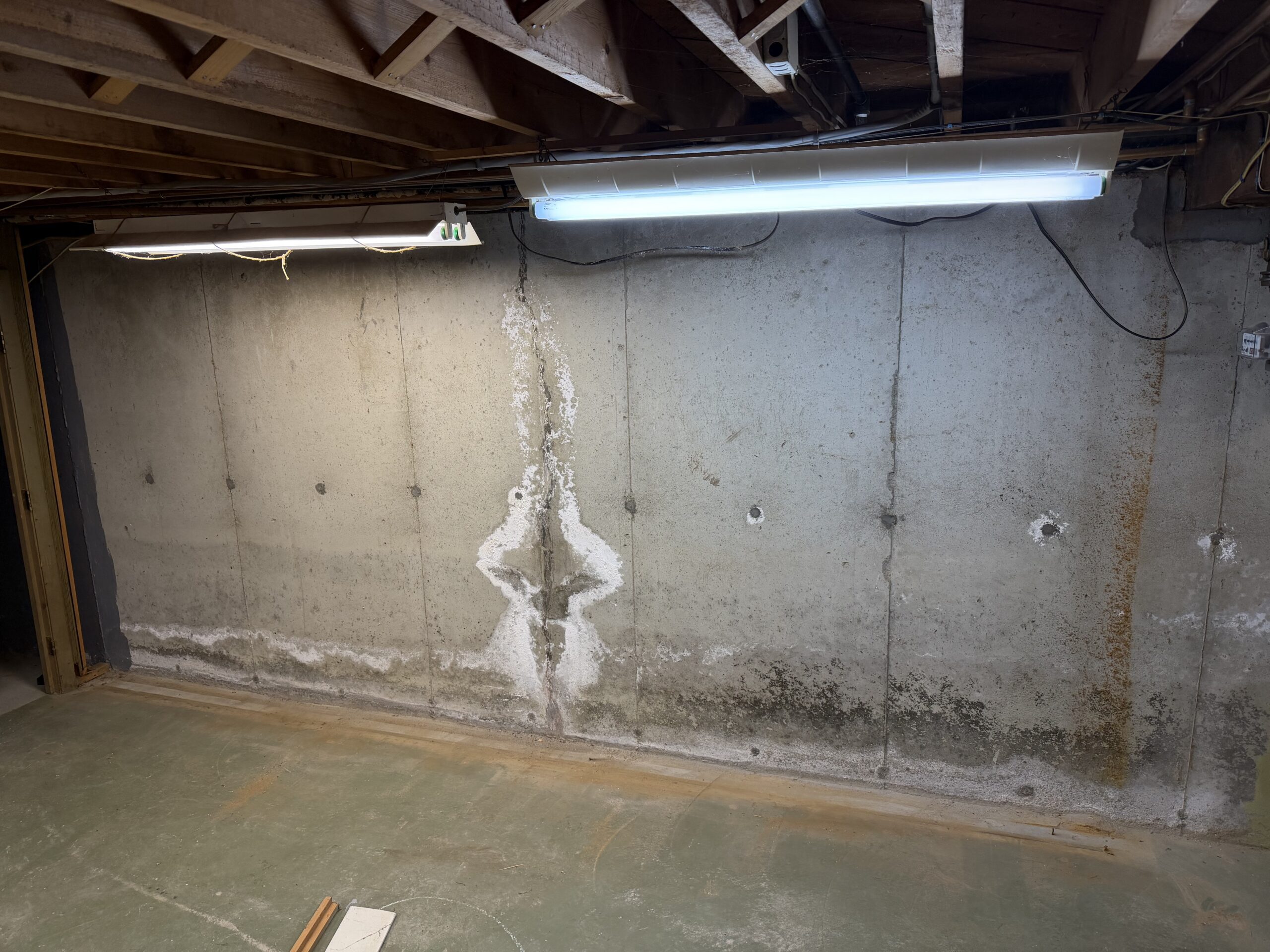
We inspect the crack and wall, then remove loose concrete and other weak material. The white efflorescence in this photo suggests moisture has been present.
Original crack before repair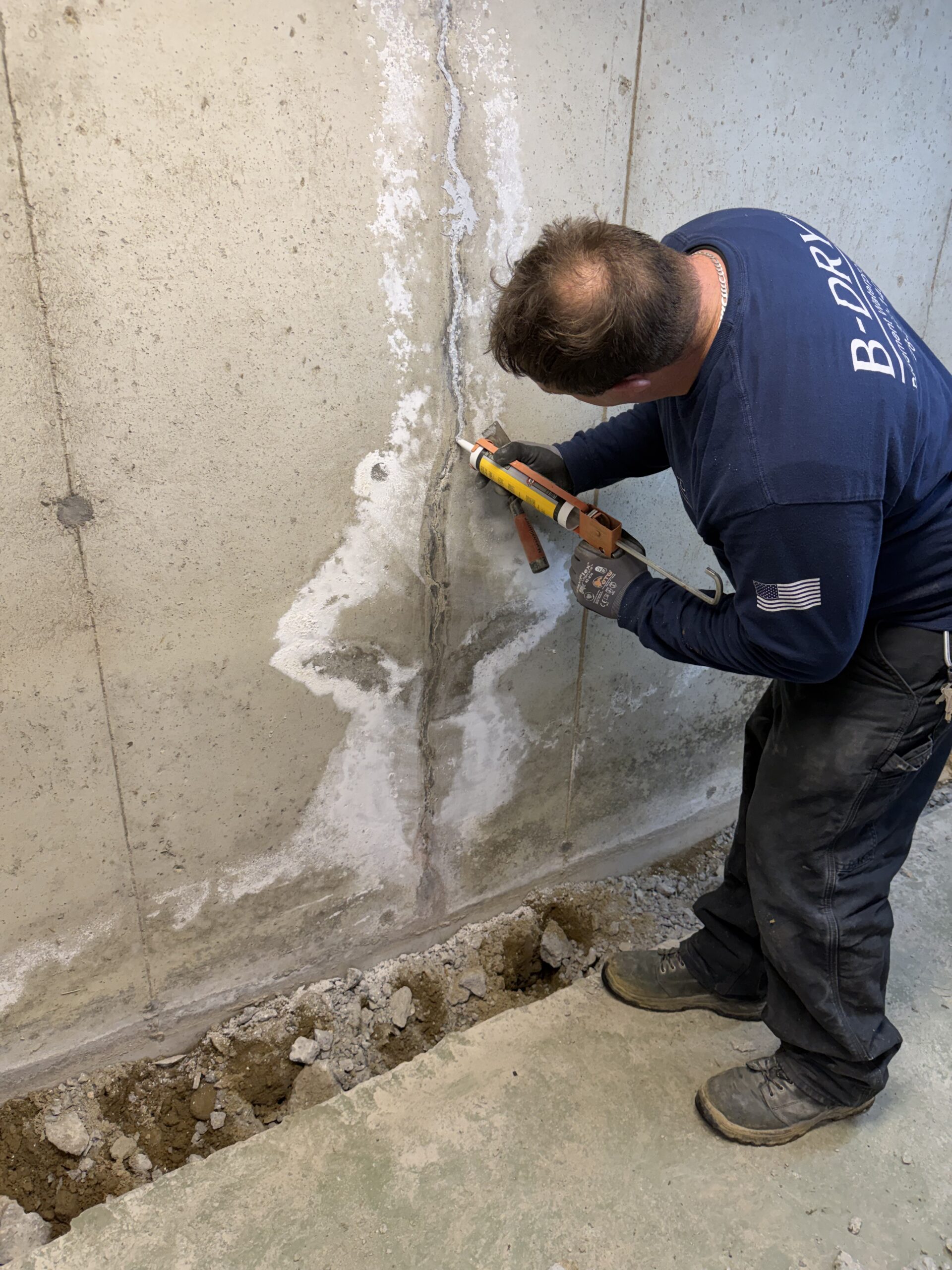
For a small crack we may use hydraulic cement; a larger or uneven area may need leveling paste. We allow the material to cure before continuing.
Filling and leveling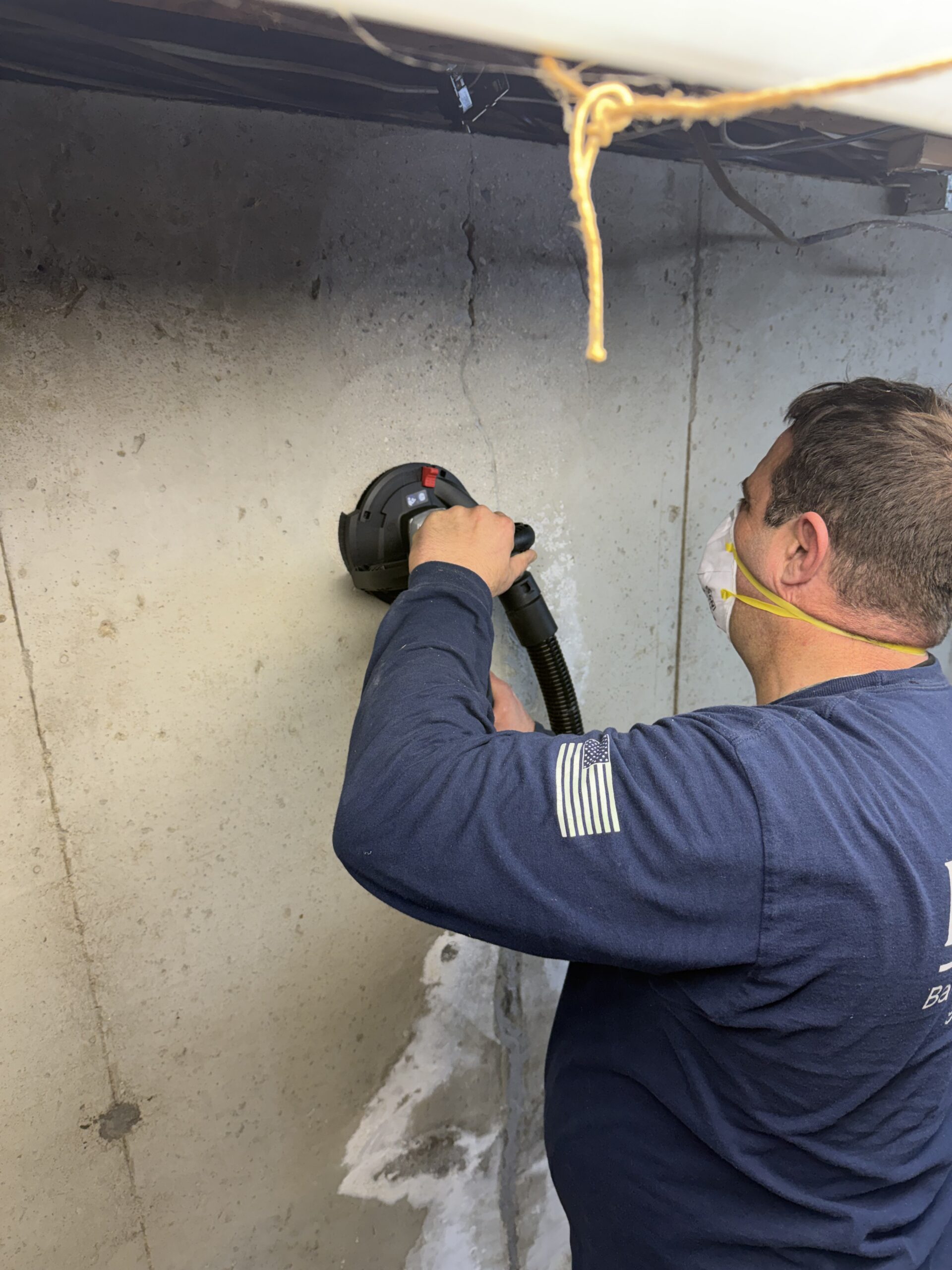
We grind away about ⅛ inch of the surface until the small stones in the concrete are exposed. Then we wipe away dust so the epoxy can grip the wall.
Grinding the concrete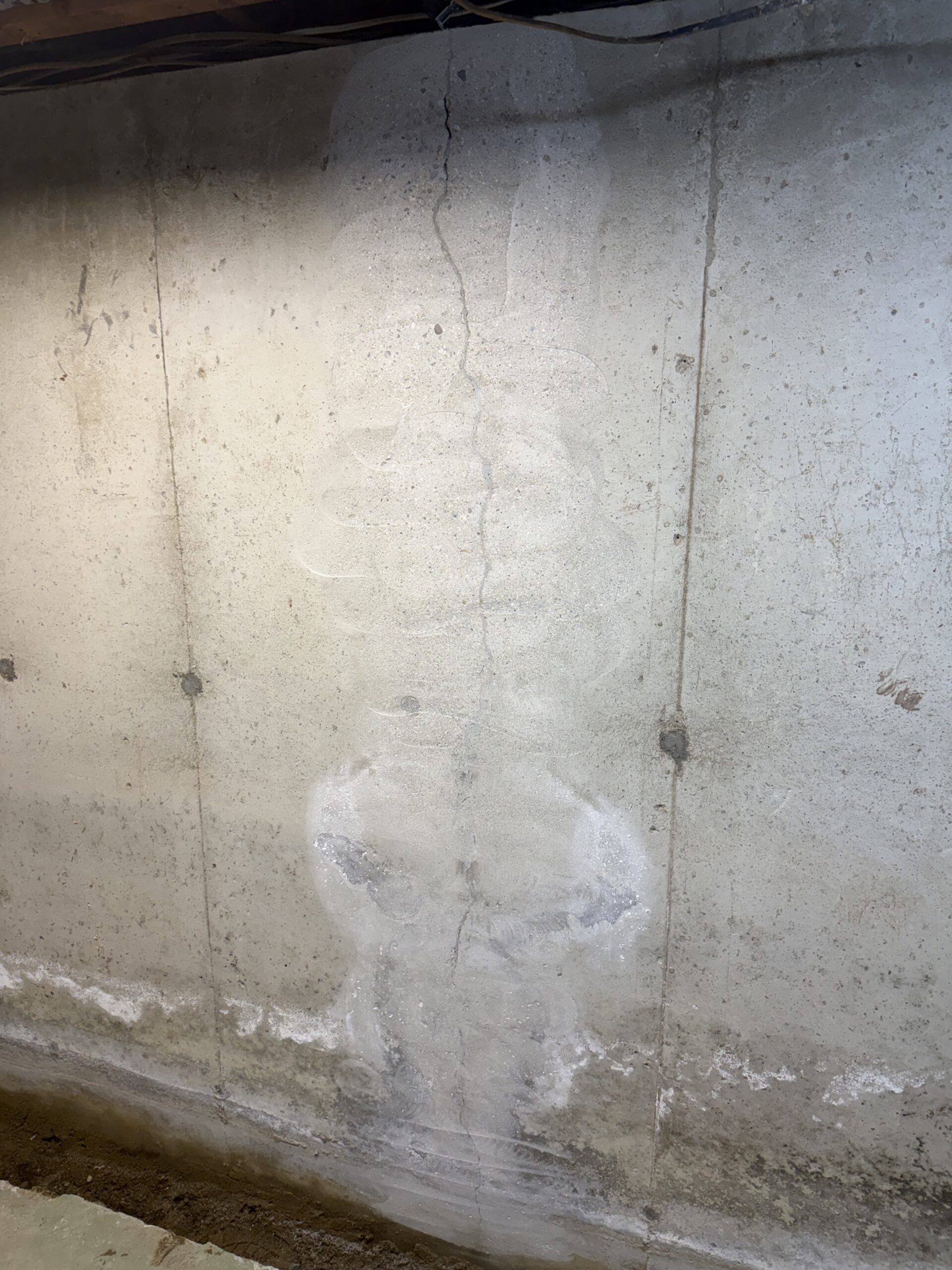
The crack is filled, the surface has been ground and the wall is clean. Epoxy has not yet been applied in this photo. Next, we coat the area with epoxy and set the fiber.
Fully prepped surface—before epoxy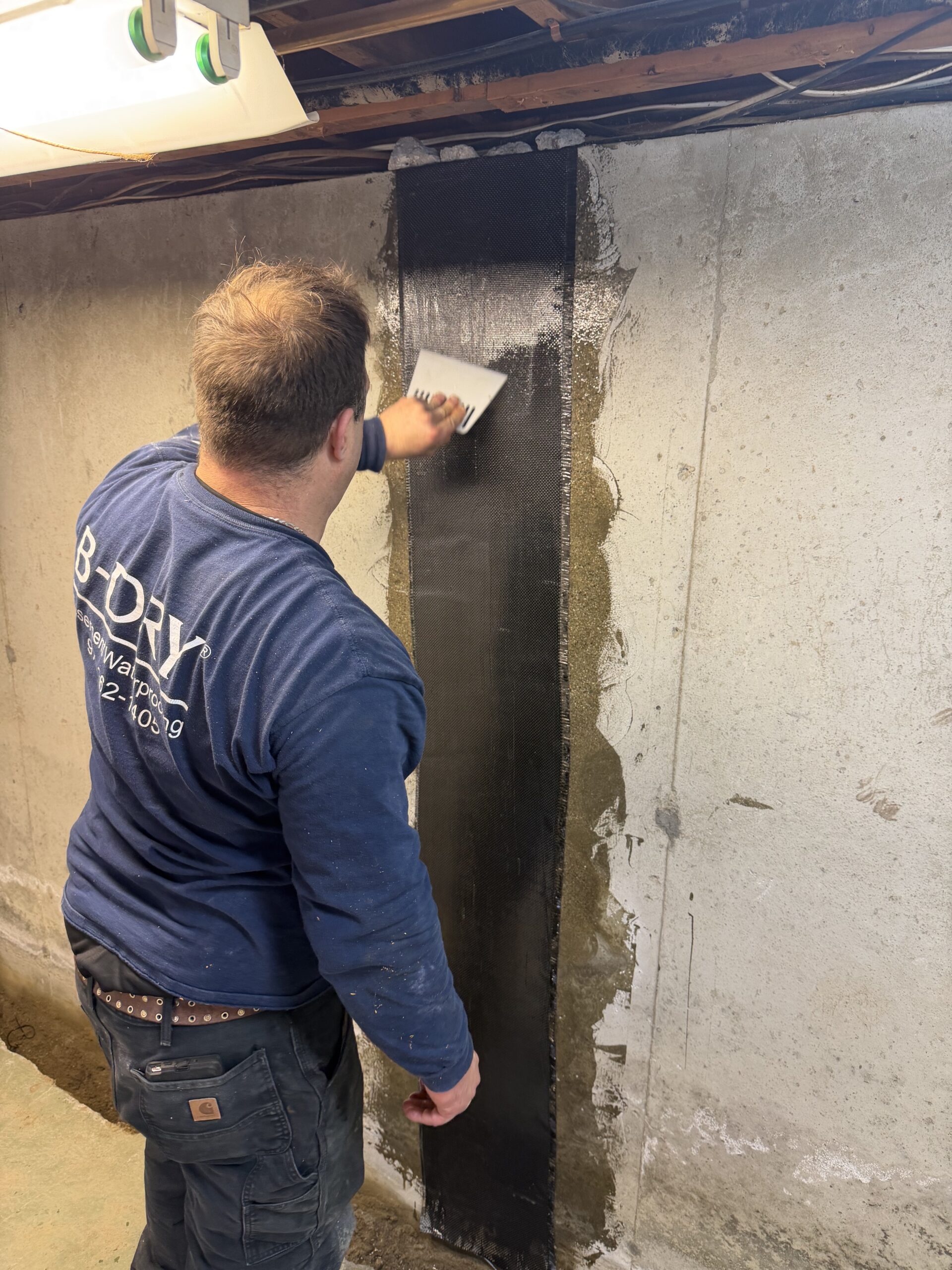
We set the fiber and work more epoxy into it until the material is fully saturated and bonded to the wall.
Carbon fiber being applied; wet epoxy around the strip will change appearance as it cures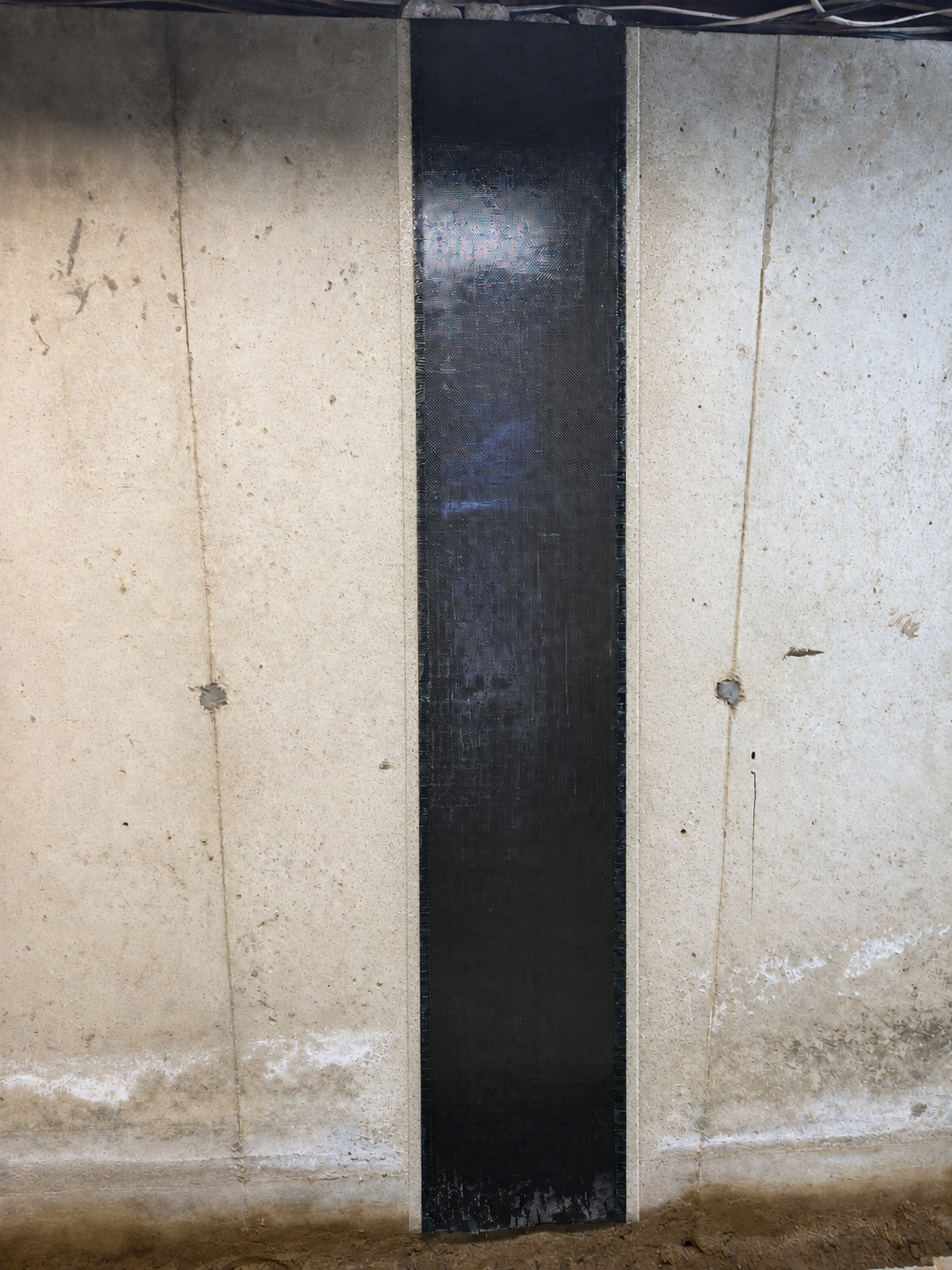
The epoxy is typically dry to the touch in about 24 hours. Allow approximately seven (7) days for a full cure before painting.
Finished carbon-fiber reinforcementFor bowed walls, we install vertical 6-inch carbon-fiber straps approximately 4 feet apart. We design the layout for your wall.
Unlike an I-beam projecting into the room, carbon-fiber reinforcement lies close to the wall, making it easier to paint or work around when finishing a basement.
Carbon fiber brings exceptional tensile strength in a thin, lightweight form—reinforcement that keeps your basement easier to use and finish.
Straps lie close to the wall instead of occupying floor space like a projecting I-beam.
Carbon-fiber reinforcement is installed from inside the basement without exterior excavation.
After the epoxy fully cures, the surface can be painted or incorporated into a finished-basement plan.
Yes. B-Dry repairs vertical and horizontal foundation cracks with carbon fiber. We inspect the crack and wall, then design the repair around the conditions we find.
Carbon fiber reinforces the wall, and filling the crack with hydraulic cement helps limit seepage. If water is entering elsewhere too, we can address drainage as part of the plan. You can attach a photo when requesting an estimate.
Yes. We work with poured concrete, concrete block and fieldstone foundations. Preparation varies by wall type, so we inspect the material and make a repair plan for your home.
The epoxy is typically dry to the touch in about 24 hours. Allow approximately seven (7) days for a full cure before painting.
Carbon fiber combines high tensile strength with a low profile. It does not take up floor space like a projecting I-beam, making it easier to work around when finishing a basement. We’ll assess your wall and explain the repair plan.
Show us the crack or bowing area. We’ll explain what we find and outline a repair plan for your wall.