
In Massachusetts, big storms happen frequently, and there are always two events happening simultaneously – flooding in your basement due to water coming in, and loss of power to your house. This is when you really need your sump pump, but this is also when your primary pump will be unable to function because it requires electricity.
A battery backup sump pump system will allow you to protect your basement from flooding when your power goes out.
How Does a Battery Backup Sump Pump System Function?
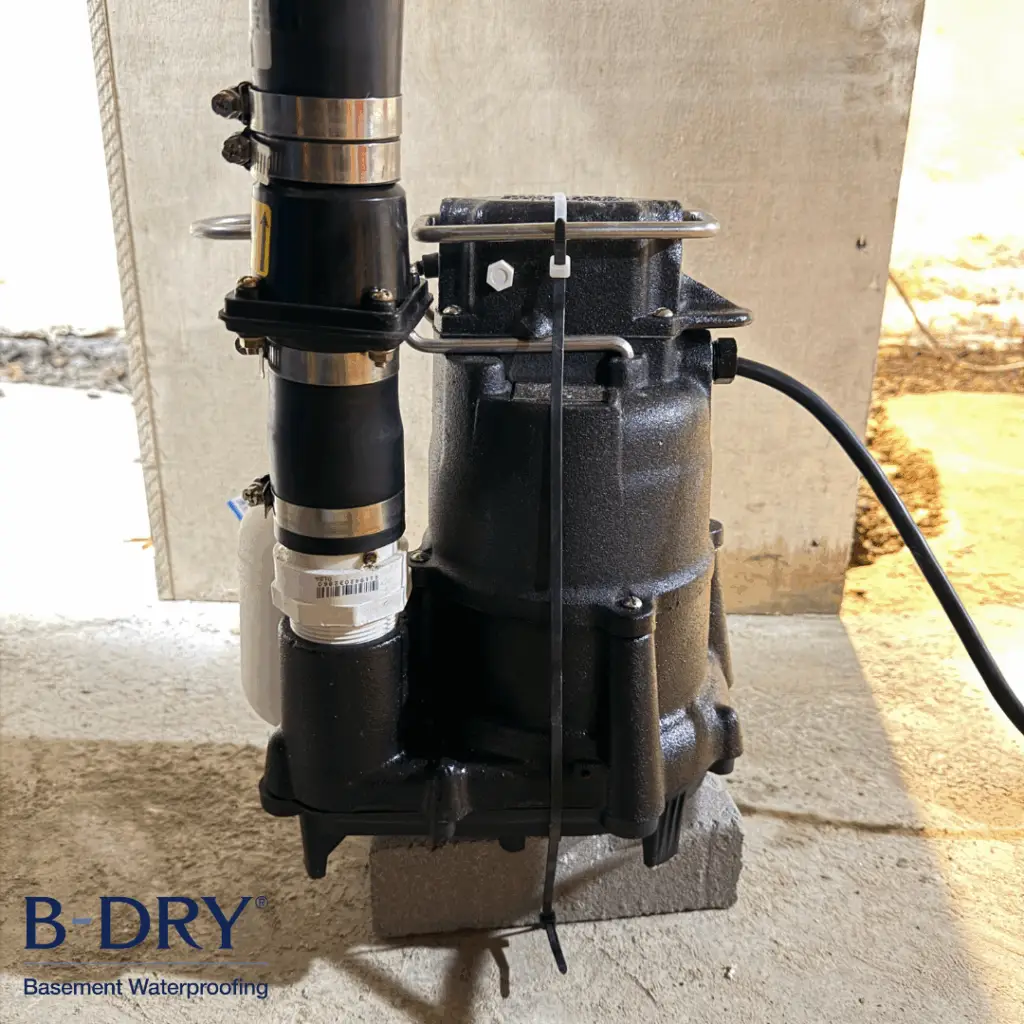
The typical way a battery backup sump pump system functions is through the placement of a secondary (backup) sump pump located adjacent to your primary sump pump within the same sump pit. Your primary sump pump will cease functioning during an electrical failure, but your backup sump pump will start immediately upon detection of increased water levels in the sump pit. In general, a battery backup sump pump system utilizes a deep-cycle marine battery and a power inverter to run the pump without access to your home’s electrical supply.
There is a float switch on your backup sump pump placed above your primary sump pump’s float switch. As such, your backup sump pump will activate only when water levels exceed those normally experienced. Once your home’s electrical supply resumes, or once water levels have returned to their normal levels, your primary sump pump will resume operation. The activation and deactivation of the entire process occur automatically without requiring you to intervene manually.
Why Are Battery Backup Sump Pumps Needed for New England Homes?
Commonality of Severe Weather Events and Electrical Failures
Weather conditions in New England are no joke. During the winter season, we receive Nor’easters; in the summer season, we experience heavy thunderstorms; and in the fall season, we can expect tropical storms. According to FEMA, the leading cause of basement flooding in the Northeast region due to severe weather is electrical failures, resulting in prolonged periods of no electricity.
Over 5,000 Massachusetts homes lost power during storms last year alone. Some of these outages were for hours, while others lasted for days. Your sump pump does not differentiate between forecasted bad weather and actual bad weather – your sump pump simply ceases to operate when you lose power.
The Worst Time For An Electrical Failure
The worst thing about electrical failures occurring during storms is the timing of the event. During spring thaw, or heavy rain, or winter ice damming, or other times when your sump pump is working hardest, the likelihood of electrical service failing is greatest.
If you are away from home when this occurs, you may not discover water pouring into your basement for hours, by which point you are facing tens of thousands of dollars in damages to floors, walls, and contents, and your home’s foundation.
Types Of Battery Backup Systems
DC Powered Battery Backup Pumps
DC-powered battery backup pumps are the most commonly used type. These pumps run off of 12V deep-cycle marine batteries that are commonly found in boats. These batteries can run your backup pump for several hours based on how quickly water is flowing from your sump pit.
We install these systems with a charger that charges the battery at all times. At the moment your power fails, the battery begins to run the backup pump. Typically, homeowners can expect to have 5 to 7 hours of protection from a fully charged battery when pumping water at moderate rates.
Water-Powered Backup Pumps
Water-powered backup pumps do not require either batteries or electricity. These pumps utilize the water pressure supplied by your home to generate suction that draws water from your sump pit. These will provide some degree of protection, provided you have municipal water service available; however, they will not provide any protection if your well pump is not functioning as well.
There are downsides to using a water-powered backup pump. First, for every 2 gallons of water removed from your sump pit, you consume approximately 1 gallon of city water, thus increasing your water bill during extended power outages. Second, water-powered backup pumps remove water at a significantly slower rate compared to battery-powered backup pumps.
Combination Systems
Some Massachusetts homeowners choose to install both types of backup pumps to maximize their protection. The battery-powered backup pump provides the bulk of the pumping, while the water-powered pump acts as a third line of defense. While this combination system will increase your initial investment, it will give you complete peace of mind during severe weather.
Determining the Correct Capacity For Your Battery Backup System
Not all battery backup systems pump the same amount of water. A standard capacity battery backup system will pump approximately 1000 to 2000 gallons of water per hour. A heavy-duty capacity battery backup system can pump 3000+ gallons of water per hour.
Determining the correct capacity for your home depends on several variables, including the amount of water that generally enters your basement, the type of soil in your yard, and the height of the local water table. A professional assessment will enable you to determine the proper capacity of the backup system you need.
For the majority of Massachusetts homes, we recommend installing a battery backup system that has the same or very close to the same capacity as your primary sump pump. For example, if your primary sump pump has a capacity of 2500 gallons per hour, we would recommend a battery backup system with the same capacity. This will provide you with the necessary protection and not just serve as a safety net that cannot keep up with the demand.
Maintenance Requirements of Battery Backup Systems
To ensure that your battery backup system functions when you need it, it is imperative to maintain it regularly. Inspect your battery every six to twelve months. Most deep-cycle marine batteries will last three to five years before being replaced. Clean the battery terminals and inspect the water level in the battery if the battery is serviceable.
Perform a test of your backup sump pump every six months. Remove the plug or switch off the circuit breaker to your primary sump pump and verify that the backup sump pump will activate and pump water correctly. Our pump maintenance and service plan includes inspections of your backup system, so you do not have to worry about remembering to do it.
Replace your batteries prior to failure, not after. A dead battery during a storm is of little assistance to you. We monitor the age of the batteries for our maintenance customers and advise you when a replacement is required.
Comparison of Installation Costs and Flood Damage Costs
The typical cost to professionally install a battery backup sump pump system ranges from $800 to $2,000, depending on the type of system selected and the configuration of your home. Although this may appear to be expensive, consider the potential costs of repairing your basement due to flooding.
According to the Insurance Information Institute, the average cost of repairing a flooded basement ranges from $10,000 to $50,000. Even small amounts of water can destroy drywall, flooring, electrical components, and contents stored in your basement. Additionally, water-damaged areas can develop mold and mildew problems that add additional repair costs.
Additionally, your homeowner’s insurance policy will not likely pay for flood damage caused by your sump pump failing during a power outage. Most policies exclude this type of water damage unless you have specifically purchased coverage for it. Therefore, you will bear the expense of repairs yourself.
A battery backup sump pump system is a means to protect your largest asset – your home. It is not merely a method to prevent water from entering your basement. It is a means to preserve your foundation, prevent mold and mildew from developing, save your belongings, and retain the value of your property.
Enjoy Peace of Mind with B-Dry New England
Since 1981, we have been providing peace of mind to residents of Massachusetts regarding flooded basements. We have installed battery backup sump pump systems in countless homes throughout the Commonwealth. We understand which systems perform best for the harsh New England climate and how to properly install them.
Every installation by our staff is backed by our Lifetime Warranty on the waterproofing system. Sump pumps are covered under a three-year manufacturer’s warranty. We also offer annual maintenance plans to ensure your backup system is ready for the next storm.
Do not wait for your next power outage to discover your basement is unprotected. Contact B-Dry New England today to schedule a complimentary assessment. We will evaluate your home’s needs and suggest the appropriate battery backup system to keep your basement dry, regardless of whatever Mother Nature sends your way.