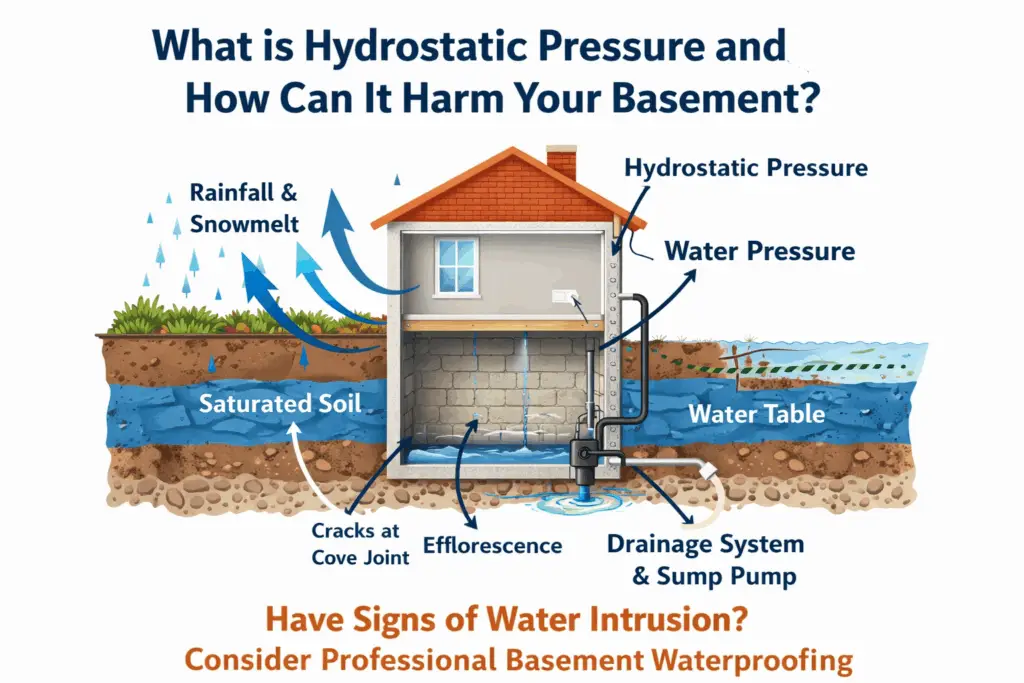
Hydrostatic pressure is the pressure produced when water-saturated soil presses against your basement walls and floor. Hydrostatic pressure is among the leading causes of basement water issues in Massachusetts homes. With large amounts of rainfall, or after snow melt, the water-filled soil will be under a higher load than dry soil. This increased load produces a lot of pressure against your basement walls (sometimes hundreds of thousands of pounds). Well-built basements may not be able to withstand the pressure of the water-saturated soil. B-Dry New England helps homeowners throughout Massachusetts protect their basements from hydrostatic pressure with professional basement waterproofing.
What is hydrostatic pressure in basements?
Hydrostatic pressure develops when the soil surrounding your basement is filled with water and presses against your foundation. Think of it in terms of water weighing 60 pounds per cubic foot. Therefore, if you have a basement located in an area that has experienced excessive rainfall or spring snow melt, you could potentially have tens of thousands of pounds of water pressure against your basement walls and floor. Additionally, the pressure increases as you go deeper into the earth, which is why basements experience so much more pressure than above-grade structures. Massachusetts has many months of rainy season and cold, snowy winters that can produce saturated soils. Clay-rich soils in Massachusetts tend to absorb and hold more water than sandy soils; therefore, homes built in clay-rich soils are at greater risk of developing hydrostatic pressure issues. The farther down you go beneath grade, the more pressure your basement will feel as groundwater rises.
How does hydrostatic pressure cause basement floor cracks?
Water pressure from hydrostatic forces pushes upward against your basement floor. Your concrete basement floor rests on top of soil and gravel. When water accumulates underneath the floor, it produces an upward force due to the pressure of the water pushing against the underside of the floor. This upward pressure can cause the floor to crack, particularly at the cove joint where the floor meets the wall. These cracks begin very small and appear as fine cracks or lines in the floor. However, the pressure continues to increase, causing the cracks to grow wider. As the water continues to seep through these growing cracks, you will find puddles of water accumulating on your basement floor. Freezing and thawing cycles in Massachusetts exacerbate the issue. When water seeps into cracks in the floor and freezes in the winter, the ice expands and widens the cracks. Then, when warmer temperatures arrive in the spring, more water can flow through the now-enlarged openings. Not only can cracks in your basement floor ruin any finished flooring you have installed (carpet, tile, etc.) but also compromise the structural integrity of your basement.
What are some warning signs that I am experiencing hydrostatic pressure damage?
There are several warning signs that hydrostatic pressure is damaging your basement. Horizontal cracks in your foundation walls are a clear indication that hydrostatic pressure is forcing the wall to bow inwards. Bowing or bulging walls indicate that the pressure has become strong enough to actually deform the structure. Seepage of water into your basement walls and/or floor, particularly after heavy rains, indicates that the pressure is great enough to push the water through your foundation. White chalky deposits, known as efflorescence, may appear on your basement walls when water has evaporated from the area where it entered your basement. Stains or dampness on walls and/or floors, regardless of whether you see actual water leaking out, suggest that water is being forced into your basement through the foundation. If doors and windows in your basement no longer fit snugly and/or no longer open/close properly, it indicates that the pressure has caused your foundation to shift and move. If you see any of these signs, it would be wise to take action to mitigate further damage.
How do I repair the hydrostatic pressure in my basement floor?
Repairing hydrostatic pressure involves two steps: relief of the pressure and control of the water once it enters your basement. An interior drainage system is the most effective method of providing relief. Interior drainage systems run along the perimeter of your basement floor. They capture water at the point it tries to enter your basement. The water then runs through the drainage system to a sump pump basin where the water is removed from your home via a sump pump. This relieves the pressure because the water has been given the path of least resistance. Proper grading and gutters are examples of exterior methods of reducing the amount of water entering your foundation. However, exterior measures alone are rarely sufficient in Massachusetts, where high water tables and frequent seasonal flooding contribute to sustained hydrostatic pressure. Combining interior drainage and exterior water control provides the best defense against hydrostatic pressure.
Will interior waterproofing systems relieve hydrostatic pressure?
Yes, interior waterproofing systems are designed to provide relief from hydrostatic pressure. When an interior drainage system is installed, you have provided a controlled exit for water being pushed against your foundation by hydrostatic pressure. Rather than trying to force its way through cracks in your walls or floor, the water will travel through the drainage system and directly to your sump pump. This greatly reduces the pressure against your foundation. The water is then pumped outside and away from your home by your sump pump. Interior drainage systems operate continuously, including during periods of extreme weather such as heavy storms when pressure is greatest. Since they are installed within your home rather than relying on underground components that can be clogged with roots or debris, interior drainage systems are more reliable than exterior solutions. At B-Dry New England, our team of experts will design and install an interior drainage system that is tailored to the specific needs of your Massachusetts property.
How does a drainage system reduce hydrostatic pressure?
A drainage system reduces hydrostatic pressure by providing an outlet for water before it builds up against your foundation. Drainage systems are typically installed in a trench along the inside perimeter of your basement, where the floor meets the wall. This location is optimal for water collection since it is where water naturally collects as it seeps through the foundation. When water enters through your walls or up through the floor, it will immediately flow into the drainage system rather than collecting in your basement. The perforated piping in the system collects the water and sends it towards the sump pump basin. As the water level in the basin increases, the sump pump turns on and sends the water outside through a discharge pipe. Constantly removing water from around your foundation, the drainage system eliminates the potential for hydrostatic pressure to develop. Protecting your basement from cracks, leaks, and other structural damage is the ultimate goal of installing a drainage system. For more information regarding how French drain systems effectively manage groundwater, click here.
B-Dry New England Offers Protection Against Hydrostatic Pressure for Massachusetts Homeowners
Hydrostatic pressure is a serious threat to the structural integrity of your basement and foundation. However, it is a problem that we resolve on a daily basis. At B-Dry New England, we have installed waterproofing systems in thousands of Massachusetts homes that are subject to poor soil conditions and extreme precipitation. Our interior drainage systems are engineered to effectively handle the unique pressures generated by New England’s climate. Regardless of whether you are noticing early warning signs such as horizontal cracks in your foundation walls, or if you are experiencing active water intrusion in your basement, we possess the necessary knowledge and equipment to protect your home from hydrostatic pressure. Contact us online to request a complimentary inspection, or call us today to learn how we can safeguard your basement from the detrimental effects of hydrostatic pressure.